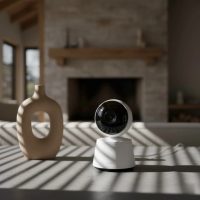
As a parent, the peace of mind that comes from knowing your little one is safe and sound, even when you’re not right beside them, is priceless. This is where a baby monitor steps in, transforming from a simple gadget into an indispensable tool in modern parenting. With advancements in technology, today’s baby monitor options offer far more than just audio; they provide a comprehensive window into your baby’s world, helping you stay connected and responsive. Welcome to Wocrt.com, where our decade of experience in baby monitoring technology guides you through making the best choice for your family.

Understanding the Different Types of Baby Monitors
The journey to selecting the perfect baby monitor begins with understanding the various types available, each designed to meet different needs and preferences.
Audio Monitors: Simplicity and Affordability
Audio-only baby monitors are the traditional choice, offering a straightforward way to hear your baby from another room. These devices consist of a microphone unit placed in the nursery and a receiver unit for the parent. They are typically the most budget-friendly option and excellent if you primarily need to know when your baby is crying or stirring. However, they don’t offer visual cues, meaning you won’t see if your baby has merely adjusted their position or truly needs attention.
Traditional Video Monitors (Non-Wi-Fi): Dedicated Parent Unit
Stepping up from audio-only, traditional video baby monitors provide both sound and a live video feed to a dedicated parent unit. These monitors operate on a closed system, often using Frequency Hopping Spread Spectrum (FHSS) technology. This means they transmit signals securely between the camera and the parent unit without connecting to your home Wi-Fi. This offers a highly secure and reliable connection, free from internet-based hacking risks. They are ideal for parents who prefer a self-contained system with excellent range within the home, typically covering large houses and yards.
Smart Wi-Fi Baby Monitors: App-Based, Extended Reach, and Advanced Features
Wi-Fi baby monitors are the most technologically advanced, connecting to your home internet and streaming video and audio to your smartphone or tablet via a dedicated app. Their main advantage is offering an “unlimited” range, allowing you to check on your baby from anywhere with an internet connection, whether you’re at work, traveling, or just in another part of the house. These monitors often come packed with advanced features such as high-definition video, sleep insights, two-way talk, and integration with smart home systems. While highly convenient, they require careful attention to cybersecurity to protect your privacy.
Movement and Health Tracking Monitors: Beyond Sight and Sound
|
Our Picks for the Best Baby Monitor in 2026
As an Amazon Associate I earn from qualifying purchases.
|
||
| Num | Product | Action |
|---|---|---|
| 1 | HelloBaby 6\'\' World First IPS 30H Battery Split-Screen Video Baby Monitor with Camera and Audio, No WiFi, Pan-Tilt-Zoom, VOX, 2-Way Talk, Night Vision, 8 Lullabies, 1000ft, for New Parents/Elderly |

|
| 2 | Jartoo 2K 5.5\" Video Baby Monitor with Camera and Audio,AI Cry Detect 1860ft Long Range Baby Monitor No WiFi Baby Camera Wireless,Clear Night Vision,ANC, 2-Way Talk,White Noise,6000mAh [2025 New] |
|
| 3 | Baby Monitor with Camera and Audio, Video Baby Monitor No WiFi Night Vision 2.4\" LCD Screen Portable Baby Camera Monitor Alarm Lullaby Temperature Sensor and 1000ft, Ideal for Baby/Elderly/Pet |
|
| 4 | HelloBaby Baby Monitor 6\" World First IPS Screen 30H Battery, Secure No WiFi, Pan Tilt Video Camera with Night Vision, VOX, 2-Way Talk, 1000ft, Portable Video Audio Monitor Ideal for Mom, Elderly, Pet |
|
| 5 | VTech VM819 Baby Monitor with Camera and Audio, 2.8” Screen Portable Baby Camera, Night Vision, 2-Way Audio, Temperature Sensor and Lullabies, Secure Transmission No WiFi, Ideal for Baby/Elderly/Pet |
|
| 6 | Baby Car Camera for Kids - 5\" 1080P IPS Suction Cup Monitor, 120° Wide-Angle & 360° Rotatable, IR Night Vision Easy Installation Backseat |
|
| 7 | HelloBaby Upgrade 5’’ Baby Monitor with 30-Hour Battery, 2 Cameras Pan-Tilt-Zoom, 1000ft Range Video Audio Baby Monitor No WiFi, VOX, Night Vision, 2-Way Talk, 8 Lullabies and Temperature |
|
| 8 | HelloBaby No WiFi Baby Monitor 5\" Screen 30-Hour Battery Pan-Tilt-Zoom Video Upgrade with Camera and Audio, Night Vision, VOX, 2-Way Talk, 8 Lullabies and 1000ft Range, HB6550 |
|
| 9 | HelloBaby 4.3\'\' Video Baby Monitor with 30 Hours Battery, Remote Pan-Tilt-Zoom Baby Monitor No WiFi, Baby Monitor with Camera and Audio, Night Vision, ECO Mode, Two-way Talk, 8 Lullabies, 1000ft Range |
|
| 10 | VTech Upgraded Audio Baby Monitor with Rechargeable Battery, Long Range, and Crystal-Clear Sound |
|
For parents seeking an extra layer of reassurance, movement and health tracking baby monitors offer specialized monitoring capabilities. These can include wearable devices (like smart socks) that track heart rate and oxygen saturation, or under-mattress pads that detect breathing movements. Many also provide detailed sleep analysis. While these monitors can provide valuable insights, it’s important to remember that they are not medical devices and should not replace professional medical advice. They are often used in conjunction with video monitors to offer a holistic view of your baby’s well-being.
Key Features Every Parent Should Consider
When investing in a baby monitor, the right features can make all the difference in providing peace of mind and convenience.
Crystal Clear Vision & Sound
- HD Video and Night Vision: Look for monitors offering 1080p HD resolution for a crisp image. High-quality infrared night vision is crucial for monitoring your baby in a dark room without disturbing their sleep.
- Two-Way Audio (Talk-Back): This feature allows you to not only hear your baby but also speak to them through the monitor, offering comfort with your voice without needing to enter the room.
- Active Noise Reduction: Some advanced baby monitors can filter out ambient background noises like fans or humidifiers, ensuring you only hear your baby’s important sounds.
Connectivity and Range
The type of connection directly impacts your monitoring experience. Traditional non-Wi-Fi monitors boast impressive indoor range, often up to 1,000 feet, which is usually sufficient for most homes. Wi-Fi monitors, on the other hand, offer theoretically unlimited range, letting you check in from anywhere via your smartphone. Consider your home’s size and your need for remote access when deciding. A dual-mode monitor, offering both local and Wi-Fi connectivity, can be a versatile option.
Battery Life: Powering Your Peace of Mind
For parent units on traditional monitors, a battery life of 8-12 hours is generally ideal, allowing for a full night or day of monitoring. For Wi-Fi monitors, the parent unit is typically your smartphone, so battery drain on your phone is a consideration, though many apps offer background audio to conserve power.
Smart Features for Modern Parenting
Modern baby monitors go beyond basic surveillance. Many offer:
- Sleep Tracking and Insights: Provides data on your baby’s sleep patterns, helping you understand their sleep habits.
- Environmental Sensors: Monitors room temperature and humidity, alerting you if conditions fall outside safe parameters.
- Lullabies and White Noise: Built-in speakers can play soothing sounds to help your baby drift off to sleep.
- Motion and Sound Detection Alerts: Customizable sensitivity to notify you only when specific activity is detected.
- Split-Screen View: Essential for families with multiple children or cameras, allowing you to monitor several areas simultaneously.
Expandability: Growing with Your Family
If you plan to have more children or want to monitor different areas of the house (e.g., a playroom), look for a baby monitor system that supports multiple cameras connected to a single parent unit or app.
Prioritizing Baby Monitor Security in a Connected World
In our increasingly connected homes, the security of your baby monitor, especially Wi-Fi enabled models, is paramount. My experience at Wocrt.com has shown me that while hacking incidents are rare, the potential for privacy breaches is real if proper precautions aren’t taken.
Understanding the Risks
Wi-Fi baby monitors are essentially IP cameras connected to your home network. Like any internet-connected device, they can be vulnerable if not secured. Hackers often target devices with default or weak passwords to gain access, sometimes as a gateway to other network devices. “It’s not about fear-mongering, but about empowering parents with knowledge,” advises Dr. Evelyn Reed, a cybersecurity expert and long-time contributor to Wocrt.com. “A well-secured Wi-Fi monitor offers incredible convenience, but security must be an active, ongoing effort, not a one-time setup.”
Essential Security Measures
To safeguard your baby monitor and your family’s privacy:
- Change Default Passwords Immediately: This is the most crucial step. Use a strong, unique password for both your baby monitor and your home Wi-Fi router.
- Enable Two-Factor Authentication (2FA): If your monitor’s app supports 2FA, activate it. This adds an extra layer of security, usually requiring a code from your phone in addition to your password.
- Keep Firmware Updated: Manufacturers regularly release firmware updates to patch security vulnerabilities. Ensure your monitor’s software is always up-to-date. Many smart monitors do this automatically, but check for manual updates.
- Secure Your Wi-Fi Network: Use a strong Wi-Fi password, and consider disabling remote access to your router if you’ve enabled it in the past and don’t actively use it.
- Disable Remote Access (if not needed): If you only plan to monitor your baby within your home network, consider disabling the monitor’s remote internet access feature to reduce its exposure.
- Use Encryption: Reputable non-Wi-Fi monitors use FHSS or GFSK encryption. For Wi-Fi monitors, look for AES-128 or AES-256 encryption.
Setting Up Your Baby Monitor for Optimal Safety and Performance
Proper setup and placement are critical for both the functionality and safety of your baby monitor.
Strategic Placement: The 3-Foot Rule and Optimal Viewing
When placing the camera or sensor unit, always adhere to the “3-foot rule”: position the baby monitor at least 3 feet (about 1 meter) away from the crib. This minimizes any potential electromagnetic field (EMF) exposure and, more importantly, keeps cords safely out of your baby’s reach. An elevated position, such as a sturdy shelf, wall mount, or even a ceiling mount, provides the best vantage point. Aim for a clear, unobstructed view that captures your baby’s entire body, not just a partial glimpse.
Step-by-Step Installation
- Power Up: Connect the baby unit to a power source. For Wi-Fi monitors, ensure it’s near your router initially for a strong connection during setup.
- Download the App (for Wi-Fi models): Install the manufacturer’s dedicated app on your smartphone or tablet.
- Connect to Wi-Fi (for Wi-Fi models): Follow the in-app instructions to connect your monitor to your home’s 2.4 GHz Wi-Fi network. This frequency is generally more stable and has a better range than 5 GHz for baby monitors.
- Pair Units (for non-Wi-Fi models): Most traditional monitors come pre-paired. If not, follow the instructions to sync the parent and baby units, often by selecting a channel.
- Secure Your Connection: Immediately change any default passwords. Enable 2FA if available.
- Name Your Camera: Assign a clear name (e.g., “Nursery Cam”) for easy identification.
Cable Management: Keeping Curious Hands Safe
Loose cords pose a strangulation hazard. Always secure monitor cables firmly to the wall or furniture using clips or cord covers, ensuring they are completely out of reach of your baby, even as they grow and become more mobile.
Testing and Troubleshooting: Ensuring Everything Works Perfectly
Once set up, perform a thorough test. Check the audio and video feed from different parts of your home to confirm range and signal strength. Adjust camera angles as needed. Test any alerts for sound or motion to ensure their sensitivity is appropriate – you want to be notified of important events, not every rustle. Keeping the user manual handy is always a good practice for future reference or troubleshooting.
Choosing the Right Monitor for Your Family’s Unique Needs
Making the final decision on a baby monitor is a personal choice that hinges on a few key factors.
Budget vs. Features: Finding Your Balance
While it’s tempting to go for the monitor with every cutting-edge feature, consider what you truly need versus what’s a “nice-to-have.” Sometimes, a simpler, more affordable audio or traditional video monitor provides all the reassurance you require. Conversely, if detailed sleep analytics or remote access are crucial for your peace of mind, investing in a feature-rich smart Wi-Fi monitor might be worthwhile.
Lifestyle Considerations: Homebody or On-the-Go?
Your daily routine plays a big role. If you work from home and your baby is typically nearby, a non-Wi-Fi video monitor might be perfect. However, if you’re often out of the house, a Wi-Fi-enabled monitor offers the flexibility to check in from anywhere, giving you a continuous connection to your little one.
Conclusion
A baby monitor is more than just a piece of technology; it’s a vital tool that fosters parental confidence and ensures your child’s safety. From the simplicity of an audio monitor to the sophisticated analytics of a smart, health-tracking system, the options are diverse. By understanding the different types, prioritizing essential features and robust security, and following proper setup guidelines, you can confidently choose the baby monitor that best fits your family’s unique needs. We at Wocrt.com are here to support you in making informed decisions, empowering you to create a safe and nurturing environment for your precious little one. Take the leap, explore the possibilities, and embrace the peace of mind a reliable baby monitor brings.
Smart home that does not lock you in
Free PDF — protocol compatibility matrix for 30 hubs and devices.